Source Bonsai Style Fake Flower for Home, Office, and Supermarket
Compare 30 listings for bonsai style fake flower options made from eco-friendly plastic. These handmade artificial plants offer fast delivery and customizable designs suitable for indoor decoration in homes, offices, and supermarkets; compare the available evidence and request quotations based on your requirements.
Key considerations
Products List


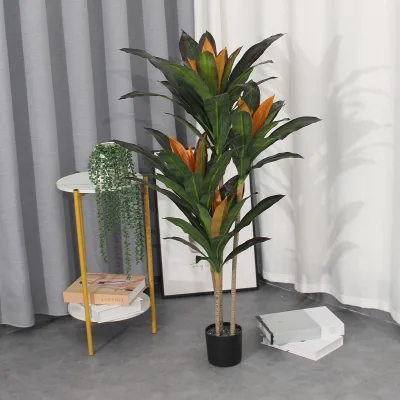


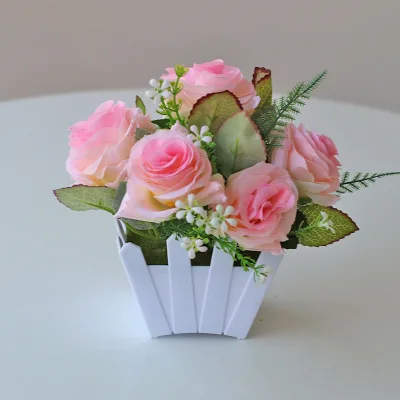


Comprehensive Sourcing Guide
Bonsai Style Fake Flower Sourcing Guide
Procuring bonsai style artificial flowers requires careful attention to material composition and aesthetic fidelity, as the market offers diverse interpretations of this traditional form. Buyers should prioritize listings that explicitly state the use of plastic materials, which are the most common base for these decorative items, while verifying that the "handmade" or "handwork" processing claims align with the desired level of detail. The observed product range includes specific models like artificial mini bamboo and olive plants, which serve as the primary reference points for this style.
When evaluating potential suppliers, it is essential to distinguish between generic artificial plants and those specifically designed with the intricate branching and compact foliage characteristic of bonsai aesthetics. The available data indicates that customization is a key differentiator, with some suppliers offering tailored designs while others provide standardized non-customized units. Buyers must verify if the "eco-friendly" feature applies to the specific bonsai variant they intend to purchase, as this attribute varies significantly across different product lines and manufacturers.
Product Scope and Observed Listing Signals
The current market for bonsai style fake flowers spans a wide spectrum of sizes, with observed standard heights ranging from approximately 35cm up to 210cm depending on the specific model. Listings frequently categorize these items under broader headings such as "Artificial Pot Plant" or "Reed Plant Potted," yet the specific bonsai style is often highlighted through descriptors like "Artificial Mini Bamboo" or "Olive." This variation in naming conventions requires buyers to cross-reference the visual style with the technical specifications to ensure the product matches the intended decorative application.
Packaging and delivery signals provide critical insight into the logistical readiness of a supplier for this specific product category. Most observed listings indicate that products are packed in cartons or boxed units, which is standard for protecting delicate artificial foliage during transit. The lead times observed in the market typically fall between 10 to 15 days for standard orders, though sample times may extend to 7-15 days. Buyers should note that while some suppliers offer fast delivery advantages, the actual timeline depends heavily on the specific customization level and the origin location, which is predominantly China.
Technical Specifications to Verify
Verifying the physical dimensions and structural integrity of bonsai style artificial flowers is paramount for ensuring they fit the intended display space. The observed product standards list specific height increments such as 60, 90, 120, 150, and 180cm, alongside smaller variants around 35cm and larger ones reaching 210cm. Buyers must confirm that the selected model matches the required height for their specific environment, whether it is a compact home office desk or a spacious supermarket aisle. The "Artificial Potted Plant" and "Artificial Flowers" categories often share these dimensional standards, but the specific bonsai style may have unique proportions that differ from standard potted plants.
Material composition and surface treatment are equally critical technical factors that define the realism and durability of the product. The supplied facts confirm that plastic is the primary material used, often treated with printing techniques to mimic natural textures. Some listings mention "Real Trink" surface treatments, suggesting an attempt to enhance the tactile realism of the artificial leaves and stems. Buyers should explicitly verify if the product is suitable for indoor use only or if it possesses the "Anti-Wind and Anti-Sunburn" features necessary for outdoor placement, as this distinction significantly impacts the product's longevity and performance in different environments.
Compliance and Safety Documentation
While the supplied data does not explicitly list specific certification numbers, buyers must ensure that any bonsai style fake flower intended for commercial or public spaces meets local safety regulations regarding flammability and material toxicity. The "Eco-Friendly" attribute mentioned in several listings suggests a potential alignment with environmental standards, but this claim requires independent verification through supplier-provided documentation rather than relying solely on product descriptions. In the absence of explicit ISO 9001 or other standard certifications in the provided facts, procurement teams should request test reports to confirm that the plastic materials used do not release harmful substances.
Safety documentation also extends to the structural stability of the potted units, particularly for taller bonsai styles that may be prone to tipping. Buyers should verify that the packaging and internal support structures are designed to prevent damage during shipping, which could compromise the aesthetic integrity of the artificial plant. Although the "Handmade" processing method implies a level of craftsmanship, it does not inherently guarantee compliance with safety standards. Therefore, it is advisable to request specific safety data sheets or compliance certificates from the supplier before finalizing any large-scale order for public venues.
Cost Drivers and Commercial Terms
The cost of bonsai style fake flowers is influenced by several variables, including the complexity of the "handmade" processing, the specific customization level, and the chosen height standard. The observed price range in the market spans from $0.30 to $58.88, reflecting the vast difference between simple, mass-produced units and highly detailed, custom-designed pieces. Buyers should anticipate that higher prices correlate with more intricate surface treatments, such as printing techniques that enhance realism, and with larger dimensions that require more material and labor.
Commercial terms regarding payment and minimum order quantities (MOQ) vary significantly among suppliers, requiring careful negotiation to align with budget constraints. The data indicates that some suppliers accept PayPal, while others require T/T transfers, and MOQs can range from as low as 4 pieces to as high as 3000 pieces. For buyers seeking custom designs, the "Custom Package" option may incur additional costs, and the "Sample Time" of 7-15 days should be factored into the overall project timeline. Understanding these commercial nuances is essential for managing cash flow and ensuring that the procurement process remains efficient and cost-effective.
Supplier Qualification and Quality Control
Assessing supplier qualification involves verifying their production capacity and their ability to maintain consistency across large orders of bonsai style artificial flowers. The observed supply ability of 2,000,000 pieces per month suggests that some manufacturers have the infrastructure to handle significant volume, but buyers must confirm if this capacity applies to the specific custom or non-customized bonsai models they require. It is crucial to evaluate whether the "Handmade" or "Handwork" processes are standardized enough to ensure that every unit meets the same quality benchmarks, especially when ordering in bulk.
Quality control measures should focus on the consistency of the "Eco-Friendly" claims and the durability of the plastic materials used in the product. Buyers should implement a rigorous inspection protocol that checks for defects in the surface treatment, such as uneven printing or loose foliage, which are common issues in handmade artificial plants. Since the origin is primarily China, establishing clear communication channels for quality feedback is vital. Suppliers should be required to provide pre-shipment samples that match the agreed-upon specifications, ensuring that the final delivery meets the aesthetic and functional expectations of the buyer.
Long-Term Procurement Checks
Establishing a long-term procurement strategy for bonsai style fake flowers requires regular audits of supplier performance and product consistency over time. Buyers should monitor whether the "Fast Delivery" advantage remains consistent as order volumes increase and whether the lead times of 10-15 days are maintained without compromise. It is also important to track the durability of the products in their intended environments, particularly if they are used in high-traffic areas like supermarkets or offices where they may be subject to frequent handling or exposure to varying light conditions.
Continuous evaluation of the product's market relevance and design trends is necessary to ensure that the sourced bonsai style artificial flowers remain competitive. As the market evolves, suppliers may introduce new surface treatments or materials that enhance the "Real Trink" effect or improve the "Anti-Wind and Anti-Sunburn" capabilities. Buyers should maintain an open dialogue with their suppliers to stay informed about these innovations and to assess whether the current product line continues to meet the evolving needs of their customers. This proactive approach ensures that the procurement strategy remains agile and responsive to market changes.
FAQs
Can I customize the size of artificial bonsai plants?
Yes, customization is available for artificial bonsai plants to meet specific decor needs. Buyers can select from standard height options such as 60, 90, 120, 150, or 180 cm. Custom designs are also acceptable for unique requirements. This flexibility ensures the plants fit perfectly in homes, offices, or supermarkets without compromising on aesthetic appeal or quality.
What is the typical lead time for orders?
The typical lead time for orders is 10 to 15 days. This duration allows for efficient processing and quality checks before shipment. Buyers should plan their procurement schedules accordingly to ensure timely delivery. Fast delivery is highlighted as a key advantage, making these artificial plants suitable for urgent decoration projects or seasonal inventory needs.
Are these artificial plants suitable for outdoor use?
Yes, certain artificial plants are designed for both indoor and outdoor applications. Features like anti-wind and anti-sunburn properties make them durable in various environments. While some models are strictly for indoor use, others withstand outdoor conditions. Buyers should verify the specific product model to ensure it matches their intended placement and environmental exposure requirements.
What payment methods are accepted for these products?
Payment methods include PayPal and T/T (Telegraphic Transfer). These options provide flexibility for international and domestic buyers. PayPal offers secure transactions for smaller orders, while T/T is suitable for larger bulk purchases. Buyers should confirm the preferred payment method with the supplier during the inquiry phase to streamline the ordering process.
What is the minimum order quantity for these items?
The minimum order quantity varies, with some items requiring as few as 4 pieces. Other products may have higher MOQs, such as 300 pieces. Buyers should check the specific product details to determine the exact MOQ. This range accommodates both small-scale decoration needs and large commercial projects, ensuring accessibility for diverse procurement requirements.
How are the artificial plants packaged for shipping?
Artificial plants are typically packaged in cartons or boxes to ensure safe transit. This packaging protects the items from damage during handling and shipping. Buyers can expect sturdy packaging that maintains the product's condition upon arrival. Proper packaging is essential for preserving the quality of handmade or printed artificial plants during long-distance transportation.